
Comprehensive Guide to Olive Harvesting: From Timing to Quality
Comprehensive Guide to Olive Harvesting: From Timing to Quality
Olive harvesting is one of the most important stages in the agricultural production cycle, directly affecting the quality of the fruit and the extracted oil. This process requires careful planning and in-depth knowledge of the influencing factors to ensure the best possible product.
1. Harvest Timing: The Critical Moment
Choosing the right time for harvesting is one of the most important factors determining the quality of olives and oil, with its impact estimated at about 30% of the final product quality.
Ripeness Indicators
Determining the exact harvest date requires reliance on scientific indicators rather than traditional timing alone, the most important of which is the Maturity Index test:
- A random sample of about 100 fruits is collected from all sides of the tree.
- The fruits are classified into 8 color categories, from 0 to 7, based on the color of the skin and pulp.
- This classification provides an accurate scientific picture of the actual ripeness level of the fruits.
Ripening Stages and Their Effect on Oil
Olives go through several ripening stages, each affecting the oil’s characteristics:
| Ripening Stage | Fruit Description | Oil Characteristics |
|---|---|---|
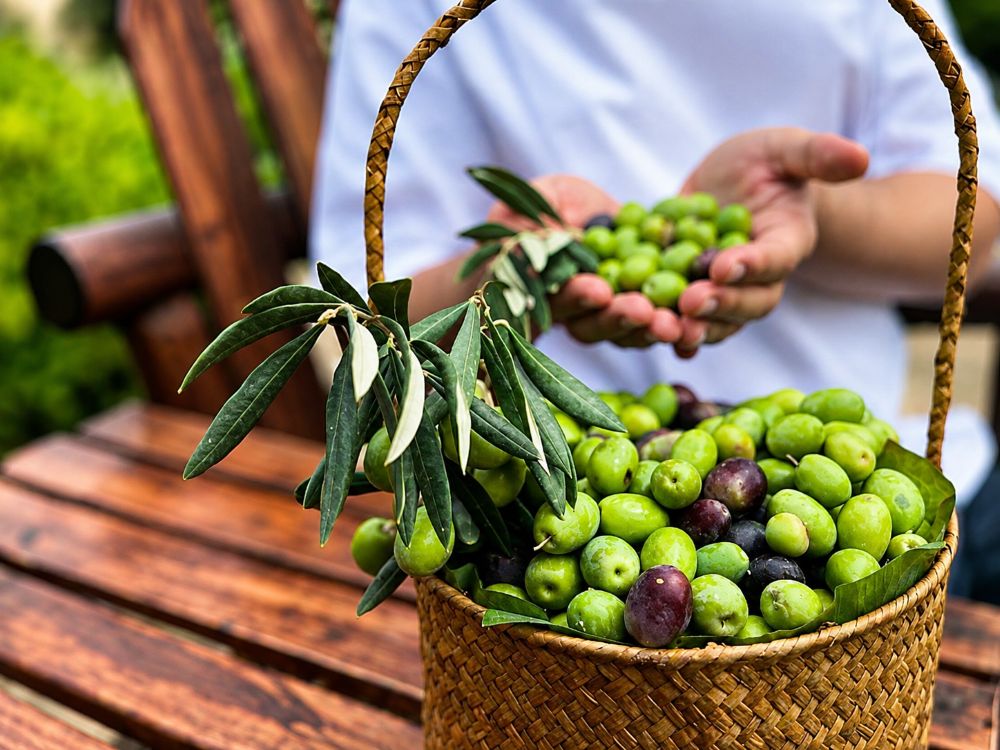
| Early Harvest (Herbaceous Stage) | Small, firm fruits with emerald green color | Aromatic, spicy oil, rich in antioxidants. Oil yield is low but quality is high |
| Veraison (Color Transition) | Purple color (between green and black) | Highest concentration of polyphenols, high-quality oil, the optimal balance between quantity and quality |
| Late Harvest (Full Ripening) | Completely black color | Higher oil quantity, but lower quality, milder flavor and higher acidity |
General Harvest Time: The olive harvest season typically extends from late October to mid-December, with variations depending on the region, variety, and climatic conditions.
2. Harvesting Methods: Between Tradition and Modernity
There are multiple methods for olive harvesting, each with its advantages and disadvantages that affect fruit quality and production costs.
Manual Harvesting
- Method: The oldest and simplest, where fruits are picked by hand, often using hard plastic combs to gently separate the olives. This method is often used for table olives that require intact, bruise-free fruits.
- Advantage: Preserves fruit integrity and prevents damage or bruising, thus maintaining oil quality.
- Disadvantage: Time-consuming, making production costs higher. Suitable for small farms or non-professional producers.
Semi-Mechanical Harvesting (Using Mechanical Combs)
- Method: Using powered handheld tools (electric or pneumatic) with vibrating forks to detach olives from branches. Nets are placed on the ground to collect fallen fruits.
- Advantage: Doubles the daily yield per worker by 2 to 3 times compared to manual harvesting, providing a good balance between quality and cost.
- Disadvantage: Branch vibration may cause fruit bruising, so they should be transported to the mill as soon as possible, preferably on the same day.
Full Mechanical Harvesting
- Method: Using large machinery, such as trunk shakers, which shake the entire tree to drop fruits onto nets or conveyor belts.
- Advantage: Very high efficiency, capable of harvesting one hectare (about 12 tons) in just 3.5 hours, significantly reducing production costs.
- Disadvantage: High initial investment, and not suitable for old, large trees, or those planted on hillsides. May cause greater fruit damage compared to other methods.
Methods Comparison Summary: A study indicated that the manual harvesting method using a comb was the best in reducing the percentage of damaged fruits and those remaining on the tree.
3. Best Practices During Harvest
To ensure the highest quality of olives and oil, it is recommended to follow these practices:
- Site Preparation: Clean the area under and around the tree before starting the harvest to facilitate work and avoid fruit contamination.
- Avoid Sticks: Using sticks to beat branches causes fruit wounds and negatively affects oil quality; safe plastic combs are preferred.
- Use Clean Tarps: Place clean nets or tarps under the tree to collect fallen fruits and prevent them from contacting the soil.
- Fruit Care: Collect fallen fruits (“joul”) that may harm oil quality, and do not leave the crop exposed to direct sunlight.
- Rapid Transport: Transport olives to the mill as quickly as possible, preferably on the same day of harvest, especially when using mechanical methods that may cause fruit bruising.
Conclusion
Olive harvesting is both an art and a science, requiring precise knowledge of ripening timing and choosing the appropriate method. The biggest challenge is finding the optimal balance between oil quality, quantity, and production costs. Whether you choose the traditional manual method that preserves fruit quality or the mechanical methods that increase efficiency and reduce costs, adherence to best practices during harvest is the key to obtaining a high-quality final product.
Related articles